
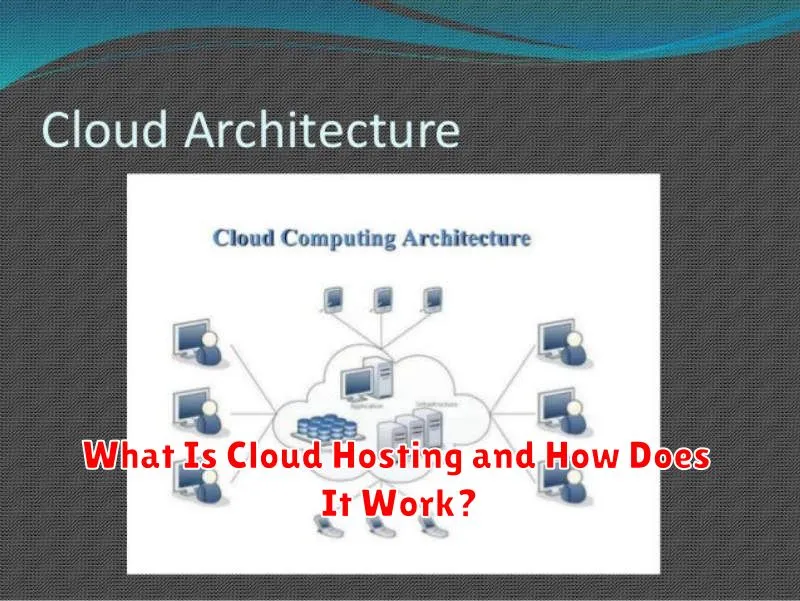
In today’s digital landscape, cloud hosting has become an essential component for businesses and individuals seeking reliable, scalable, and cost-effective web hosting solutions. Understanding what cloud hosting is and how it works is crucial for making informed decisions about your online presence. This article will delve into the intricacies of cloud hosting, explaining its core principles, benefits, and functionalities, empowering you to harness its power for your website or application.
Unlike traditional hosting, cloud hosting utilizes a network of interconnected servers to distribute resources and ensure redundancy. This distributed architecture offers unparalleled scalability, reliability, and performance. We’ll explore the different types of cloud hosting services, compare them with traditional hosting models, and discuss the advantages and disadvantages of adopting a cloud hosting solution. By the end of this article, you’ll have a comprehensive understanding of how cloud hosting works, its various applications, and how it can benefit your specific needs.
Definition of Cloud Hosting
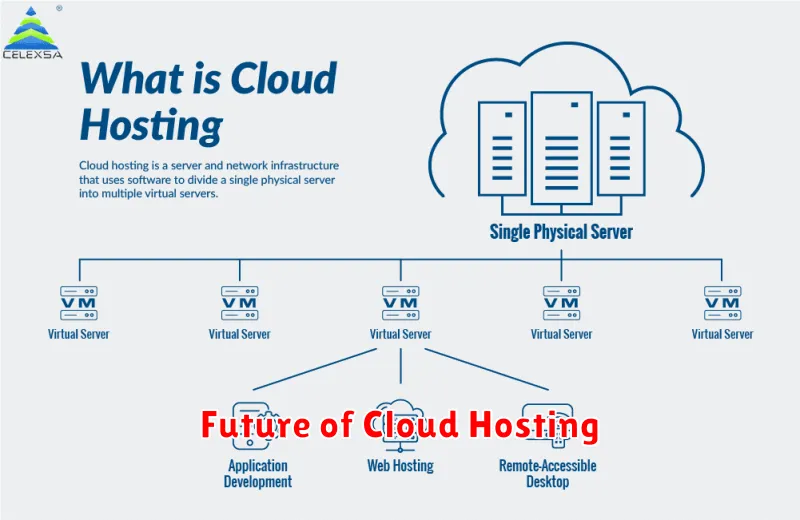
Cloud hosting is a method of hosting websites and applications that utilizes a network of interconnected servers, rather than a single physical server. Resources such as processing power, storage, and memory are pooled together and distributed across this network, often referred to as “the cloud”.
This allows for greater scalability and flexibility. Users only pay for the resources they consume, making it a cost-effective solution, especially for businesses with fluctuating demands. Reliability is also enhanced because if one server fails, others in the network can seamlessly take over, ensuring minimal downtime.
How Cloud Hosting Differs from Shared Hosting
While both cloud and shared hosting offer a way to host your website, they differ significantly in their underlying architecture and resource allocation.
Shared hosting places multiple websites on a single physical server, sharing all its resources. This means your website’s performance can be affected by other sites on the same server. Think of it like an apartment building – everyone shares the same utilities and space.
Cloud hosting, on the other hand, utilizes a network of interconnected servers. Your website can draw resources from this network as needed, offering greater flexibility and scalability. Imagine this like a power grid – you draw electricity as required from a vast interconnected network.
Key differences lie in resource allocation, scalability, and reliability. Cloud hosting generally offers greater uptime and performance due to its distributed nature. Cost is another factor, with shared hosting often being the more budget-friendly option for smaller websites with lower traffic demands.
Key Components: Virtual Servers, Storage
Cloud hosting relies on virtualization to create virtual servers. These servers act like independent physical machines but share the resources of powerful underlying hardware. This allows for flexibility and scalability, as resources can be easily allocated and adjusted as needed.
Storage in cloud hosting is typically provided through virtualized storage systems. This means data isn’t tied to a specific physical location but distributed across multiple devices for redundancy and availability. Different storage options cater to various needs, from high-performance SSDs to more cost-effective standard storage.
Understanding Load Distribution

Load distribution is a crucial aspect of cloud hosting. It refers to the efficient distribution of incoming network traffic across multiple servers. This ensures no single server is overwhelmed, resulting in improved website performance and availability.
A load balancer acts as a “traffic manager,” distributing client requests across the server pool. If one server fails or becomes overloaded, the load balancer automatically redirects traffic to the remaining healthy servers. This redundancy minimizes downtime and ensures consistent service delivery, even during peak traffic periods.
Load distribution methods include round-robin, least connections, and IP hashing. The chosen method depends on the specific application and desired performance characteristics.
Elastic Resources and Scalability
One of the most significant advantages of cloud hosting is its elasticity and scalability. Cloud resources, like processing power, storage, and memory, can be easily scaled up or down as needed. This on-demand resource allocation allows businesses to adapt quickly to changing demands.
If website traffic suddenly spikes, you can automatically provision more resources to handle the increased load. Conversely, during periods of low activity, resources can be scaled back down, optimizing costs. This flexibility eliminates the need for large upfront investments in hardware and allows businesses to pay only for the resources they consume.
Redundancy and Failover Systems
Cloud hosting providers utilize redundancy to minimize service disruptions. This involves duplicating critical components like servers, storage, and network devices across multiple locations. Should one component fail, the system automatically switches to a redundant backup, ensuring continuous operation.
Failover systems are integral to this process. They constantly monitor the health of each component. Upon detecting a failure, the failover system redirects traffic and workloads to the redundant resources, making the transition seamless for the end-user.
Data Centers and Availability Zones
Cloud hosting relies on a network of data centers. These facilities house the physical servers and networking equipment that power cloud services. They are designed with redundant power, cooling, and security systems to ensure high availability.
Within a region, multiple availability zones exist. These zones are isolated locations, each with its own independent power, cooling, and networking. This design provides fault tolerance. If one zone experiences an outage, the others can continue operating without interruption, maintaining the availability of your applications and data.
Cloud Hosting Benefits for Users
Cloud hosting offers several key advantages for users. Scalability is a primary benefit, allowing users to easily adjust resources as needed. This eliminates the limitations of traditional hosting where resources are fixed.
Cost-effectiveness is another significant advantage. Users only pay for the resources they consume, avoiding upfront hardware investments and reducing operational expenses.
Reliability is also enhanced with cloud hosting. Data is distributed across multiple servers, ensuring redundancy and minimizing downtime in case of hardware failures.
Challenges and Limitations
While cloud hosting offers numerous advantages, it’s crucial to acknowledge its challenges and limitations. Vendor lock-in can make migrating data and applications between providers complex. Security concerns, while mitigated by providers, still require diligence from users regarding data protection and access control.
Downtime, though less frequent than with traditional hosting, can occur due to provider outages. Limited control over the underlying infrastructure can be a constraint for users requiring highly specialized configurations. Lastly, bandwidth limitations can affect performance if not adequately provisioned, potentially impacting website speed and application responsiveness.
Future of Cloud Hosting
The future of cloud hosting appears bright, driven by several key trends. Serverless computing is gaining traction, abstracting away server management entirely. This allows developers to focus solely on code, improving efficiency and scalability.
Edge computing is another significant development, bringing computation and data storage closer to the user. This reduces latency and improves performance, especially for applications reliant on real-time data processing. The increasing adoption of AI and machine learning is also shaping cloud hosting, with specialized hardware and software becoming more prevalent.
Finally, a growing emphasis on sustainability is driving innovation in data center design and energy efficiency, leading to greener cloud hosting solutions.
