
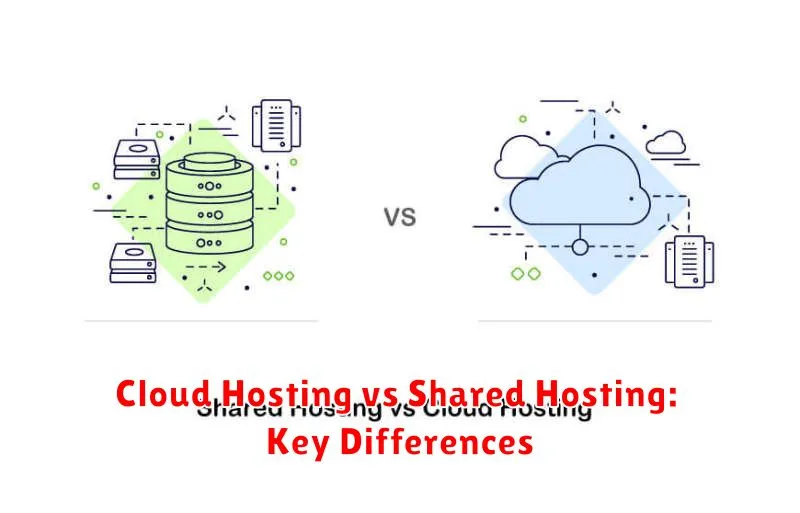
Choosing the right web hosting solution is a critical decision for any business or individual looking to establish an online presence. The options can seem overwhelming, but two of the most popular choices are cloud hosting and shared hosting. Understanding the key differences between these two hosting models is essential for making an informed decision that aligns with your specific needs and budget. This article will explore the core distinctions between cloud hosting vs shared hosting, highlighting the advantages and disadvantages of each to help you determine the optimal solution for your website.
This comparison of cloud hosting vs shared hosting will delve into various aspects, including performance, scalability, security, and cost. By examining these key differences, you will gain a clearer understanding of which hosting environment is best suited for your website’s requirements. Whether you are launching a small blog, a growing e-commerce platform, or a large enterprise application, understanding the nuances of cloud hosting and shared hosting is crucial for long-term success. This article will provide you with the necessary insights to make a well-informed decision when choosing between cloud hosting vs shared hosting.
Definition of Shared Hosting
Shared hosting is a type of web hosting where multiple websites reside on a single server. Resources like processing power, memory, and disk space are shared among all the users on that server.
Think of it like an apartment building. Each website has its own apartment (hosting space), but they share the building’s utilities (server resources) with other tenants (other websites). This makes shared hosting a very cost-effective option, especially for smaller websites or those just starting out.
However, because resources are shared, the performance of one website can be affected by others on the same server. If one website experiences a sudden surge in traffic, it could potentially slow down other websites sharing the same resources.
Definition of Cloud Hosting
Cloud hosting is a method of hosting websites and applications that utilizes a network of interconnected servers, often referred to as “the cloud,” rather than a single physical server. This network pools resources from multiple physical servers, offering greater flexibility and scalability.
Unlike traditional hosting, where websites reside on a single server, cloud hosting distributes website data and resources across this network. If one server experiences issues, another seamlessly takes over, ensuring high availability and minimal downtime. Resources are allocated dynamically based on demand, meaning websites can quickly scale resources up or down as needed.
Performance Comparison

A key differentiator between cloud and shared hosting lies in performance. Shared hosting often suffers from the “noisy neighbor” effect. Resources are shared among multiple users on the same server, meaning one website’s high traffic can negatively impact the performance of others.
Cloud hosting, with its distributed architecture, offers greater stability and scalability. Resources are not limited to a single server. If one server experiences high traffic, the load can be balanced across other servers in the cloud, ensuring consistent performance.
This inherent flexibility allows cloud hosting to handle traffic spikes more effectively than shared hosting, leading to improved uptime and faster loading speeds. While shared hosting can be sufficient for low-traffic websites, cloud hosting is often the preferred choice for businesses that require consistent performance and scalability.
Uptime and Reliability Factors
Uptime is a critical factor when choosing a hosting solution. Cloud hosting generally offers higher uptime guarantees than shared hosting due to its distributed nature. If one server fails, others can seamlessly take over, minimizing downtime.
Shared hosting, on the other hand, relies on a single server. If this server experiences issues, all websites hosted on it will be affected. This can lead to longer downtime and potential data loss if proper backups are not in place.
Reliability is also affected by resource allocation. In shared hosting, resources are shared amongst all users, meaning a surge in traffic on one website can impact the performance of others. Cloud hosting offers dedicated resources and scalability, ensuring consistent performance even during traffic spikes.
Security Features Compared
Security is a critical consideration when choosing between cloud and shared hosting. Shared hosting environments inherently pose greater security risks. Since resources are shared, a vulnerability on one website can potentially affect others on the same server.
Cloud hosting offers enhanced security due to its isolated nature. While individual virtual machines (VMs) reside within the same cloud infrastructure, they are segregated, limiting the impact of security breaches on neighboring VMs. Cloud providers typically invest heavily in robust security measures, including firewalls, intrusion detection systems, and data encryption.
Scalability Differences
A key difference between cloud and shared hosting lies in their scalability. Shared hosting offers limited scalability. Resources are shared among multiple users on a single server, restricting the ability to handle traffic spikes or increased resource demands. Upgrading often involves migrating to a more expensive plan.
Cloud hosting, conversely, provides high scalability. Resources are distributed across a network of servers, allowing for on-demand scaling. If your website experiences a sudden surge in traffic, the cloud environment can automatically allocate more resources to maintain performance. This flexibility makes cloud hosting ideal for businesses anticipating growth or fluctuating traffic patterns.
Price vs Value
While shared hosting often boasts a lower initial price, it’s crucial to consider the long-term value. Cloud hosting, though sometimes appearing more expensive upfront, can offer greater value over time.
Shared hosting’s limitations, such as restricted resources and performance fluctuations, can hinder website growth and potentially lead to lost revenue. Scalability is a key advantage of cloud hosting, allowing businesses to adjust resources as needed and avoid performance bottlenecks. This flexibility can translate to improved reliability and reduced downtime, essential for maintaining customer satisfaction and business continuity.
Best Use Cases for Each
Choosing between cloud and shared hosting hinges on your specific needs. Shared hosting excels for small websites, blogs, or portfolios with limited traffic. Its simplicity and affordability make it ideal for beginners. Think of a small online store just starting out, or a personal blog sharing updates.
Cloud hosting, on the other hand, shines when scalability and reliability are paramount. Rapidly growing businesses, e-commerce platforms experiencing traffic spikes, and websites requiring high availability benefit from cloud hosting’s flexibility and power. Consider a large online retailer during peak seasons, or a business-critical application needing constant uptime.
How to Decide for Your Website
Choosing between cloud and shared hosting depends entirely on your website’s specific needs and resources. Consider these key factors:
Traffic: Anticipate your website traffic. Shared hosting suits low to moderate traffic, while cloud hosting excels with fluctuating or high traffic volumes due to its scalability.
Performance: If consistent high performance is crucial, cloud hosting’s dedicated resources and scalability offer a significant advantage over shared hosting.
Security: Evaluate your security needs. While shared hosting provides basic security measures, cloud hosting typically offers more advanced security features and greater control.
Budget: Shared hosting offers a more budget-friendly entry point. Cloud hosting, with its scalability and performance, generally comes at a higher price.
Technical Expertise: Shared hosting requires less technical management. Cloud hosting can offer greater control and customization, but may require more technical expertise.
Future-Proofing Your Hosting Choice

When deciding between cloud and shared hosting, consider future growth. Scalability is key. Shared hosting offers limited resources, potentially hindering expansion. Cloud hosting, however, provides flexibility, allowing you to easily scale resources as your needs evolve.
Think about performance. As your website traffic grows, shared hosting can become strained, affecting site speed and user experience. Cloud hosting distributes the load, maintaining consistent performance even during traffic spikes.
