
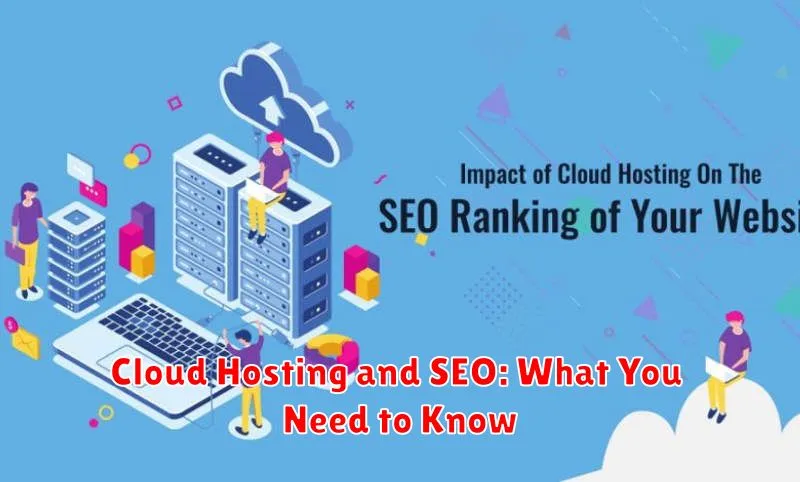
In today’s digital landscape, a strong online presence is crucial for business success. Search Engine Optimization (SEO) plays a vital role in driving organic traffic to your website, and your choice of web hosting can significantly impact your SEO efforts. This article explores the critical connection between cloud hosting and SEO, providing you with essential knowledge to make informed decisions that elevate your website’s search engine rankings. Understanding how cloud hosting influences website speed, uptime, and security is paramount for achieving optimal SEO performance.
Cloud hosting offers numerous advantages that can positively influence your SEO strategy. From enhanced website speed and improved uptime to robust security measures, cloud hosting provides a solid foundation for online visibility. We’ll delve into the specifics of how these factors contribute to better SEO, empowering you to leverage the power of cloud hosting to reach a wider audience and achieve your online business goals. Discover how scalability and resource management provided by cloud hosting can further enhance your SEO effectiveness.
Does Hosting Affect SEO?
The short answer is yes, hosting can significantly impact your SEO.
Site speed is a crucial ranking factor. Slow loading times due to inadequate hosting can negatively affect your search engine rankings. Search engines prioritize user experience, and a slow website provides a poor user experience.
Uptime and server reliability are also essential. Frequent downtime can hurt your site’s visibility in search results. Search engines may penalize sites that are consistently unavailable.
Server location can influence your local SEO. If you’re targeting a specific geographic area, choosing a server located in that region can be beneficial.
Security plays a role as well. A secure hosting environment protects your website from malware and hacking, which can lead to search engine penalties.
Page Load Speed and Ranking
Page load speed is a critical factor for both user experience and search engine optimization (SEO). Search engines like Google consider site speed a crucial ranking signal. A slow-loading website can negatively impact your search engine rankings, leading to lower visibility and reduced organic traffic.
Faster page load times correlate with improved user engagement metrics. Visitors are more likely to stay on a site that loads quickly, leading to lower bounce rates and increased time spent on page. This positive user behavior further reinforces to search engines that your website offers a valuable experience, potentially boosting your rankings.
Uptime and Site Accessibility
Uptime is crucial for SEO. Search engines prioritize websites that are consistently available to users. If your site is frequently down, search engines may penalize you, resulting in lower rankings. Cloud hosting can offer higher uptime percentages due to its redundant infrastructure.
Site accessibility, closely related to uptime, refers to how readily available your website is to users and search engine crawlers. Extended downtimes prevent search engines from indexing your site, affecting your visibility. Cloud hosting’s scalability and reliability contribute to improved site accessibility.
Geolocation and Server Proximity

Geolocation plays a significant role in search engine optimization (SEO). Search engines often prioritize showing users results that are geographically relevant to them. This means the physical location of your server can influence your search rankings, particularly for local searches.
Choosing a server located closer to your target audience can improve server proximity. This closer proximity can lead to faster loading speeds for users in that region. Since page speed is a ranking factor, improved loading times can positively impact your SEO performance.
For businesses targeting a global audience, utilizing a Content Delivery Network (CDN) can be beneficial. A CDN caches content on servers distributed across various geographical locations, improving load times for users worldwide. This can be especially important for international SEO.
SSL Certificates and Security
SSL certificates are crucial for both security and SEO. They encrypt the connection between a user’s browser and the server, protecting sensitive data like passwords and credit card information. This encryption builds trust and encourages users to interact with your website.
Search engines like Google prioritize secure websites, giving a ranking boost to sites with SSL. Having an SSL certificate shows you take security seriously, which is a positive signal for both users and search engines. This improved ranking can lead to increased visibility and organic traffic.
Mobile Responsiveness
In today’s mobile-first world, mobile responsiveness is a critical aspect of both SEO and user experience. A mobile-responsive website adapts its layout and content to fit any screen size, ensuring a seamless browsing experience for users on smartphones, tablets, and desktops. Google prioritizes mobile-first indexing, meaning its algorithms predominantly use the mobile version of a website for ranking and indexing.
Cloud hosting can greatly contribute to mobile responsiveness by offering scalable resources. When a website experiences traffic spikes from mobile users, cloud hosting can automatically adjust resources to handle the increased demand, preventing slow loading times and ensuring a positive user experience.
Bounce Rate and Speed Correlation
Website speed significantly influences bounce rate. A slow-loading site frustrates users, leading them to abandon the page before it fully loads. This is especially true for mobile users who often have less patience for slow loading times.
Bounce rate, the percentage of visitors who leave a site after viewing only one page, is a crucial SEO factor. Search engines interpret a high bounce rate as a sign of poor user experience or irrelevant content, potentially impacting rankings.
Site speed is also a direct ranking factor. Search engines prioritize sites that offer a positive user experience, and speed is a critical component of that. Improving your site’s loading time can, therefore, positively impact both bounce rate and search engine rankings.
Structured Data and Hosting
Structured data plays a crucial role in how search engines understand your website’s content. While your hosting provider doesn’t directly influence the structured data itself, a reliable hosting environment ensures that search engine crawlers can consistently access and process this data. Downtime or slow loading speeds can hinder this process, negatively impacting your SEO.
Ensure your site utilizes appropriate structured data formats like Schema.org. This helps search engines understand the context of your content, potentially leading to rich snippets and improved visibility in search results.
Using CDN for SEO Benefits
A Content Delivery Network (CDN) can significantly improve your website’s SEO performance. By caching static content like images, CSS, and JavaScript files on servers geographically closer to your users, a CDN reduces latency. This faster loading time directly impacts user experience, a key ranking factor for search engines.
CDNs also improve website availability and resilience. By distributing content across multiple servers, they mitigate the risk of downtime due to server overload or other issues. Consistent uptime ensures search engines can reliably crawl and index your website, further contributing to better SEO.
Choosing an SEO-Friendly Host

Your hosting choice directly impacts your SEO performance. A slow website can negatively affect your search engine rankings. Search engines prioritize user experience, and slow loading times lead to higher bounce rates, signaling a poor user experience.
When selecting a host, prioritize speed and uptime. Look for features like SSD storage, a content delivery network (CDN), and server locations close to your target audience. These factors can significantly improve your website’s loading speed.
Security is another crucial aspect. A secure host protects your website from malware and hacking attempts, which can damage your SEO. Choose a host that offers features like SSL certificates and regular security updates.
