

Choosing the right cloud hosting provider is a crucial decision for any business or individual looking to leverage the power and flexibility of the cloud. The sheer number of providers and the variety of services they offer can be overwhelming. This article will guide you through the essential factors to consider when selecting a cloud hosting provider, ensuring you make an informed decision that aligns with your specific needs and goals. We’ll cover everything from understanding different cloud hosting types, like Infrastructure as a Service (IaaS), Platform as a Service (PaaS), and Software as a Service (SaaS), to evaluating key performance metrics and security considerations. By the end, you’ll be equipped to confidently choose the best cloud hosting provider for your requirements.
Navigating the complex landscape of cloud hosting services requires a clear understanding of your project’s technical requirements, budget constraints, and long-term objectives. This guide breaks down the selection process into manageable steps, providing you with a framework to compare cloud providers based on factors such as scalability, reliability, cost, and security. Whether you’re a startup looking for a cost-effective solution or an established enterprise seeking advanced features and robust cloud infrastructure, this article will help you make a strategic choice that empowers your success in the cloud.
Understand Your Hosting Needs
Before diving into the myriad of cloud hosting providers, it’s crucial to understand your own requirements. A clear understanding of your needs will guide you towards the right provider and prevent overspending or performance issues.
Consider the following factors:
- Website Traffic: Anticipated traffic volume significantly impacts the resources required. Higher traffic necessitates more robust hosting solutions.
- Resource Requirements: Evaluate your needs for CPU, RAM, and storage. Resource-intensive applications require more powerful servers.
- Scalability: Consider your future growth potential. Choose a provider that allows you to easily scale resources as your needs evolve.
- Budget: Establish a clear budget to avoid overspending. Different providers offer varied pricing models.
- Technical Expertise: Your level of technical expertise will influence your choice between managed and unmanaged hosting solutions.
Evaluate Performance and Speed
Performance and speed are critical factors when selecting a cloud hosting provider. A slow website can negatively impact user experience and search engine rankings.
Consider these factors:
- Server location: Choose a provider with servers close to your target audience to minimize latency.
- Content Delivery Network (CDN): A CDN can significantly improve website speed by caching content closer to users.
- Server resources: Ensure the provider offers adequate CPU, RAM, and storage to handle your website’s traffic demands.
- Scalability: Verify that the provider can easily scale resources up or down as needed.
Research the provider’s uptime guarantee and look for a provider with a strong track record of reliability.
Security Features and Compliance
Security is paramount when selecting a cloud hosting provider. Evaluate the provider’s security measures, including physical security of data centers, data encryption methods, and access control policies. Look for features like firewalls, intrusion detection systems, and DDoS protection.
Compliance certifications are crucial, especially if your industry has specific regulations. Ensure the provider complies with standards relevant to your business, such as HIPAA, PCI DSS, or GDPR. Verify their certifications and audit reports.
Pricing Transparency

Transparent pricing is crucial when selecting a cloud hosting provider. A provider should clearly outline all costs associated with their services. This includes not only the base price but also any additional fees for bandwidth, storage, support, or other resources.
Look for providers that offer predictable billing. Unpredictable or hidden costs can significantly impact your budget. A good provider will offer clear pricing tiers or usage-based models so you understand how your costs will scale with your needs.
Consider the contract terms as well. Be wary of lengthy contracts or complex termination fees. Flexible contracts allow you to adapt to changing business requirements without penalty.
Customer Support and SLAs
Customer support is crucial when choosing a cloud hosting provider. Problems can arise at any time, so 24/7 availability via phone, email, or chat is essential. Look for providers offering proactive support rather than just reactive responses.
Service Level Agreements (SLAs) outline the provider’s guaranteed uptime and performance. A strong SLA should clearly define uptime percentages (e.g., 99.99%) and the consequences of failing to meet them, such as service credits. Carefully review the SLA to ensure it aligns with your business needs.
Scalability and Resource Flexibility
Scalability is a crucial factor when selecting a cloud hosting provider. Your chosen provider should allow you to easily scale resources up or down based on your needs. This ensures optimal performance during peak times and prevents overspending during periods of low traffic.
Closely related to scalability is resource flexibility. A good cloud provider offers a variety of resource types, such as different CPU, memory, and storage options. This allows you to tailor your cloud environment to the specific requirements of your applications.
Ease of Use and Control Panel
A user-friendly control panel is essential for managing your cloud hosting environment. Look for a provider offering an intuitive interface with easy-to-understand tools for tasks like server management, application deployment, and database administration.
Consider whether you prefer a provider’s proprietary control panel or a popular option like cPanel or Plesk. Familiarize yourself with the different options available and choose one that aligns with your technical expertise.
Features like one-click installations for popular applications, automated backups, and easy DNS management can significantly simplify server administration and save you valuable time.
Data Center Locations
The physical location of a data center plays a critical role in website performance and reliability. A provider with data centers closer to your target audience will generally result in lower latency and faster loading times for your users.
Consider the geographic distribution of your users. If your audience is primarily in North America, choosing a provider with data centers in that region is beneficial. Similarly, if your users are global, a provider with a wider network of data centers across various continents is more suitable.
Reviews and User Feedback
Customer reviews and user feedback provide valuable insights into a cloud hosting provider’s strengths and weaknesses. Thoroughly research reviews on reputable platforms.
Look for recurring themes in both positive and negative reviews. Pay close attention to comments regarding customer support, server uptime, and performance.
While individual reviews can be biased, a large volume of similar feedback can indicate a consistent trend. Use this information to help you make an informed decision.
Trial Periods and Guarantees
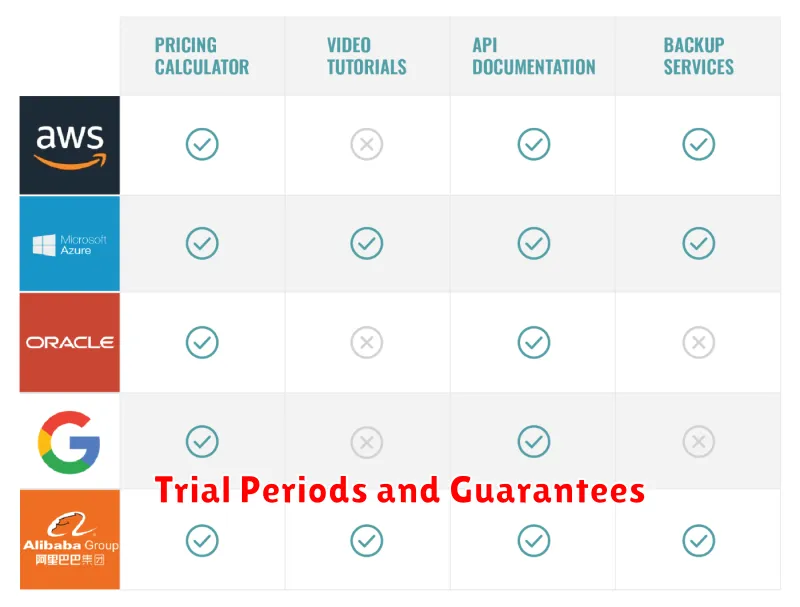
Trial periods offer a risk-free way to evaluate a cloud hosting provider’s services. Look for providers offering sufficient time to thoroughly test their platform. A longer trial period generally indicates confidence in their services.
Guarantees, such as uptime and money-back guarantees, provide further assurance. A strong uptime guarantee (e.g., 99.9%) demonstrates a commitment to reliability. Similarly, money-back guarantees offer recourse if the service doesn’t meet your expectations. Scrutinize the terms of these guarantees carefully.
