
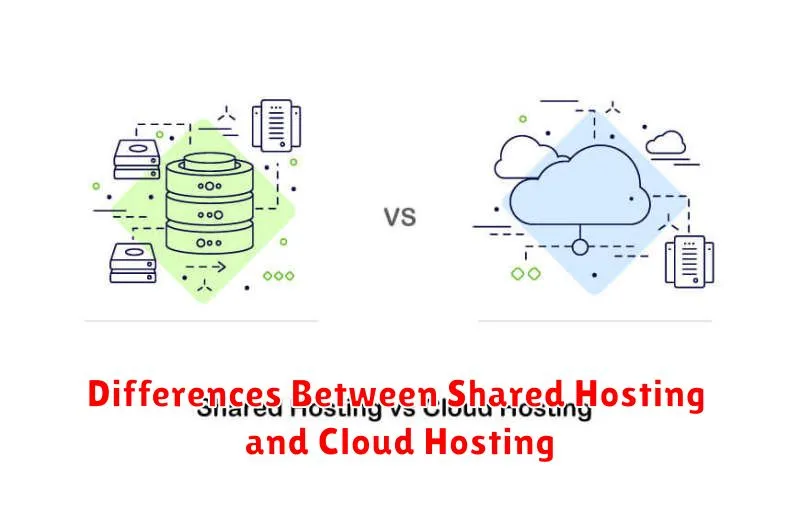
Choosing the right web hosting is crucial for your website’s success. Are you debating between shared hosting and cloud hosting? Understanding the key differences between these two popular hosting solutions will empower you to make an informed decision. This article will delve into the core distinctions, exploring the advantages and disadvantages of both shared hosting and cloud hosting to help you determine the optimal choice for your specific needs. We will cover aspects like performance, scalability, security, and cost, providing a comprehensive comparison of shared hosting vs. cloud hosting.
Shared hosting and cloud hosting represent distinct approaches to website hosting. Shared hosting involves multiple websites residing on a single server, sharing its resources. In contrast, cloud hosting utilizes a network of interconnected servers, offering greater flexibility and reliability. This fundamental difference impacts various aspects of website performance and management. This article will guide you through the nuances of each, highlighting the pros and cons of shared hosting and cloud hosting, enabling you to select the hosting solution best aligned with your website’s requirements and growth potential.
What Is Shared Hosting?
Shared hosting is a type of web hosting where multiple websites reside on a single server. This server’s resources, like CPU, RAM, and storage, are shared among all the users.
Think of it like an apartment building. Each website has its own apartment (hosting space), but they all share the building’s utilities (server resources). This makes shared hosting the most affordable option, ideal for small websites and beginners with limited traffic.
What Is Cloud Hosting?
Cloud hosting utilizes a network of interconnected servers, often referred to as “the cloud,” to host websites. Unlike traditional hosting that relies on a single server, cloud hosting distributes resources across multiple physical machines. This redundancy ensures greater reliability and scalability.
When a website experiences increased traffic, cloud hosting can automatically allocate more resources from the network to handle the demand. Conversely, during periods of lower traffic, resources can be scaled down, optimizing cost-efficiency. This dynamic resource allocation is a defining characteristic of cloud hosting.
Performance Comparison
A key difference between shared and cloud hosting lies in their performance characteristics. Shared hosting often suffers from the “noisy neighbor” effect. Resources are shared among multiple users on the same server, meaning one website’s traffic surge can negatively impact the performance of others.
Cloud hosting, in contrast, offers greater scalability and resilience. Resources are distributed across multiple servers, mitigating the impact of traffic spikes on individual websites. If one server experiences issues, the others can seamlessly absorb the load, ensuring consistent performance.
In summary, cloud hosting generally provides superior performance and stability compared to shared hosting, especially under heavy load or unexpected traffic surges.
Security and Uptime Factors

Security and uptime are crucial aspects to consider when choosing between shared and cloud hosting. Shared hosting environments often present higher security risks. Since resources are shared, a vulnerability on one website can potentially affect others on the same server. Cloud hosting generally offers better security due to its isolated nature.
Uptime guarantees also differ. While shared hosting providers typically offer decent uptime, cloud hosting often boasts higher uptime percentages due to redundancy and failover capabilities. If one server fails, another takes over seamlessly, minimizing downtime. Cloud hosting generally offers more robust security and higher uptime compared to shared hosting, although at a higher cost.
Scalability and Resource Allocation
A key difference between shared and cloud hosting lies in scalability and resource allocation. Shared hosting environments divide server resources among multiple users. This limits scalability, as resources are fixed and contention can occur during peak usage. Upgrading resources often requires migrating to a higher-tiered shared plan.
Cloud hosting, conversely, offers dynamic resource allocation. Utilizing a network of servers, cloud platforms allow users to scale resources up or down as needed. This on-demand scalability provides greater flexibility and ensures websites can handle traffic fluctuations efficiently. Users only pay for the resources they consume, optimizing cost-effectiveness.
Pricing and Cost Models
A key difference between shared and cloud hosting lies in their pricing structures. Shared hosting typically uses a fixed monthly or annual fee for a predetermined set of resources. This often makes it the more affordable option initially.
Cloud hosting, however, generally employs a pay-as-you-go model. You are charged based on the resources you consume, offering greater scalability and flexibility. While potentially more expensive as your needs grow, it prevents paying for unused resources.
Technical Support Levels
A key difference between shared and cloud hosting lies in the level of technical support provided. Shared hosting often comes with basic support options, such as email or ticket-based systems, and may have limited availability. Response times can vary.
Cloud hosting providers typically offer more comprehensive support, including phone support, live chat, and dedicated account managers. They often boast faster response times and more advanced troubleshooting assistance, reflecting the mission-critical nature of many cloud-based applications.
Ideal Use Cases for Each
Shared hosting is best suited for small websites, blogs, or personal portfolios with low to moderate traffic. It is an economical choice for beginners and projects that don’t require extensive resources or advanced customization.
Cloud hosting excels with resource-intensive websites, rapidly scaling businesses, and applications demanding high availability. Its flexible nature and ability to handle traffic spikes make it ideal for e-commerce platforms, dynamic web applications, and businesses experiencing rapid growth.
Migration Options
Migrating from shared hosting to cloud hosting involves several approaches. Manual migration offers the most control, requiring you to transfer files and databases yourself. This method is best suited for technically proficient users.
Automated migration tools provided by some cloud hosting providers simplify the process. These tools automate much of the transfer, reducing the manual effort required. However, compatibility with your existing setup should be confirmed.
Assisted migration services are available for those seeking professional support. Experts handle the entire migration process, ensuring a smooth transition. This option often incurs an additional cost but minimizes downtime and potential issues.
Which One Should You Choose?
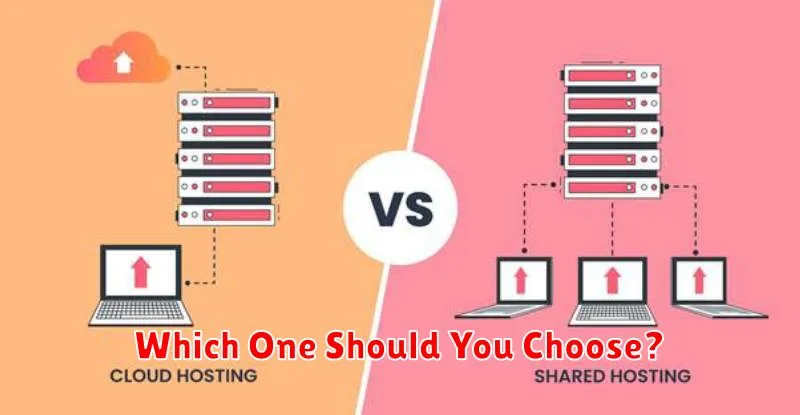
Selecting between shared hosting and cloud hosting depends entirely on your specific needs and resources. Shared hosting is a cost-effective solution ideal for beginners, hobbyists, or small websites with low traffic. It requires minimal technical knowledge and offers a simplified setup.
Cloud hosting, on the other hand, provides scalability and reliability, making it suitable for growing businesses, e-commerce platforms, or websites experiencing fluctuating traffic. While it typically involves a higher cost, it offers greater control and performance.
Consider factors like your budget, technical expertise, expected traffic volume, and the need for scalability when making your decision.
