
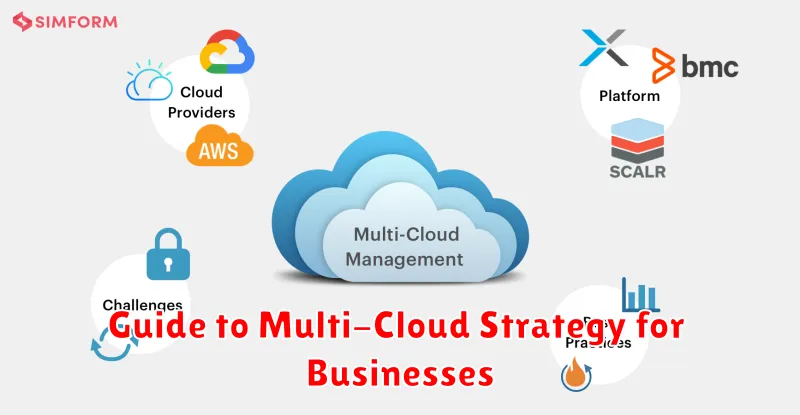
In today’s rapidly evolving digital landscape, businesses are increasingly adopting multi-cloud strategies to enhance agility, resilience, and scalability. A multi-cloud strategy involves leveraging the services of two or more cloud providers, such as AWS, Azure, Google Cloud, or others. This approach allows businesses to avoid vendor lock-in, optimize costs by selecting the most suitable services from different providers, and improve disaster recovery capabilities by distributing workloads across multiple clouds. This comprehensive guide will delve into the key aspects of developing and implementing a successful multi-cloud strategy, enabling your business to harness the full potential of the cloud.
This guide explores the essential components of a robust multi-cloud strategy, including cloud provider selection, workload placement, security considerations, cost optimization, and management tools. By understanding the benefits, challenges, and best practices associated with multi-cloud, businesses can make informed decisions and develop a tailored strategy that aligns with their specific needs and objectives. Whether you are considering migrating to a multi-cloud environment or already have a multi-cloud presence, this guide offers valuable insights and practical advice to help you navigate the complexities of multi-cloud management and maximize your return on investment.
What Is Multi-Cloud Strategy?
A multi-cloud strategy involves using cloud services from more than one cloud provider. Instead of relying solely on a single vendor, like AWS, Azure, or Google Cloud, businesses opt to distribute their workloads across several different providers. This approach differs significantly from a hybrid cloud strategy, which combines public and private cloud environments.
Organizations choose a multi-cloud strategy for a variety of reasons, primarily to avoid vendor lock-in, enhance resiliency against outages, and optimize costs by leveraging the strengths of different providers. It allows businesses to select the best-fit cloud environment for specific workloads, maximizing performance and efficiency.
Why Businesses Use Multiple Clouds
Leveraging multiple cloud providers has become a strategic imperative for many businesses. This multi-cloud approach offers several key advantages.
Avoiding Vendor Lock-in: Relying on a single provider can create dependencies and limit flexibility. A multi-cloud strategy mitigates this risk by distributing workloads across different vendors. This allows businesses to negotiate better pricing and avoid being beholden to a single vendor’s policies.
Optimizing for Performance and Cost: Different cloud providers excel in different areas. One might offer superior performance for specific applications, while another provides more competitive pricing for storage. A multi-cloud approach allows businesses to choose the best provider for each workload, optimizing both performance and cost-effectiveness.
Enhanced Resilience and Disaster Recovery: Distributing workloads across multiple clouds significantly improves resilience. If one provider experiences an outage, the others can continue to operate, minimizing disruption to business operations. This redundancy is crucial for effective disaster recovery.
Benefits of a Multi-Cloud Setup
Leveraging a multi-cloud strategy offers several key advantages for businesses. Avoiding vendor lock-in is a primary benefit, allowing organizations to select best-of-breed services from different providers and maintain flexibility.
Increased resilience and redundancy is another significant advantage. Distributing workloads across multiple cloud providers minimizes the impact of outages and ensures business continuity.
A multi-cloud approach can also lead to cost optimization. By leveraging competitive pricing models and specialized services from different providers, businesses can potentially reduce overall cloud spending.
Challenges in Management
Managing a multi-cloud environment presents unique challenges. Complexity is a significant hurdle, requiring specialized expertise to navigate different platforms, tools, and services. Maintaining consistency in security, governance, and compliance across disparate environments can also be difficult.
Cost optimization becomes more intricate with multiple cloud providers. Tracking spending, negotiating contracts, and leveraging discounts require careful planning and execution. Vendor lock-in is another concern, as integrating deeply with one provider can limit flexibility and increase switching costs.
Finally, skill gaps within teams can hinder successful multi-cloud management. Finding and retaining personnel proficient in various cloud platforms is crucial for effective operation and optimization.
Data Portability and Integration
Data portability is a crucial aspect of a successful multi-cloud strategy. It ensures your organization can seamlessly move data between different cloud providers, avoiding vendor lock-in and maximizing flexibility. This portability enables you to choose the best cloud environment for specific workloads and easily adapt to changing business needs.
Integration is equally important. A well-integrated multi-cloud environment allows your different cloud platforms to communicate and share data effectively. This interoperability simplifies management, enhances data analysis, and streamlines workflows, ultimately improving operational efficiency.
Avoiding Vendor Lock-In
A primary driver for multi-cloud adoption is mitigating the risks of vendor lock-in. Vendor lock-in occurs when a business becomes overly reliant on a single cloud provider, making it difficult and costly to switch providers later.
A multi-cloud strategy inherently reduces this risk by distributing workloads across multiple providers. This diversification provides flexibility and negotiating leverage. If one vendor raises prices or experiences an outage, you have the option to shift resources to another provider.
Key strategies for avoiding lock-in include using open-source technologies, adopting cloud-agnostic tools, and designing applications with portability in mind. Abstracting infrastructure dependencies through containerization and orchestration also minimizes vendor-specific configurations.
Cost and Performance Trade-Offs
A multi-cloud strategy inherently introduces cost and performance complexities. Cost optimization becomes more challenging as businesses manage spending across different providers. Varied pricing models, data transfer fees, and management overhead contribute to this complexity.
Performance can also be affected. Latency can increase when accessing resources across geographically dispersed cloud providers. Integrating services across clouds requires careful planning to maintain acceptable performance levels. Businesses must carefully evaluate the trade-offs between cost savings and performance requirements when designing their multi-cloud architecture.
Security in Multi-Cloud Environments
Security is a critical aspect of any multi-cloud strategy. Managing security across different cloud providers presents unique challenges.
Consistency is key. Organizations should aim for a unified security posture across all cloud platforms. This involves standardizing security policies, procedures, and tools as much as possible.
Visibility is also crucial. A centralized security management system can provide a comprehensive view of security across all cloud environments, enabling faster threat detection and response.
Choosing the Right Mix of Providers
Selecting the right combination of cloud providers is crucial for a successful multi-cloud strategy. This decision requires careful consideration of several key factors. Business needs should be the primary driver, dictating the specific services and features required. Evaluate each provider’s strengths and weaknesses in relation to your specific requirements.
Cost is another critical factor. Compare pricing models and look for opportunities to leverage competitive pricing. Consider geographic coverage if you require low-latency access in specific regions. Finally, assess the integration capabilities of each provider to ensure seamless interoperability between your chosen cloud environments.
Implementation Best Practices
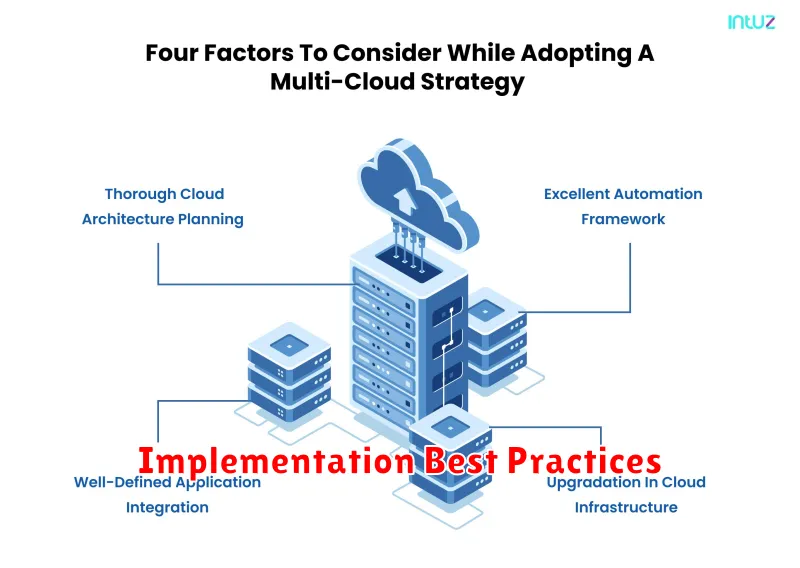
Successfully implementing a multi-cloud strategy requires careful planning and execution. Prioritize establishing clear objectives and defining key performance indicators (KPIs) to measure success. A phased approach is recommended, starting with a pilot project on a smaller scale before full-scale deployment.
Automation plays a crucial role in managing the complexity of a multi-cloud environment. Implement infrastructure-as-code (IaC) and automated configuration management tools. Security must be a top priority. Implement consistent security policies and controls across all cloud platforms. Regularly monitor performance and cost across your cloud providers to ensure optimization and avoid unexpected expenses.
